
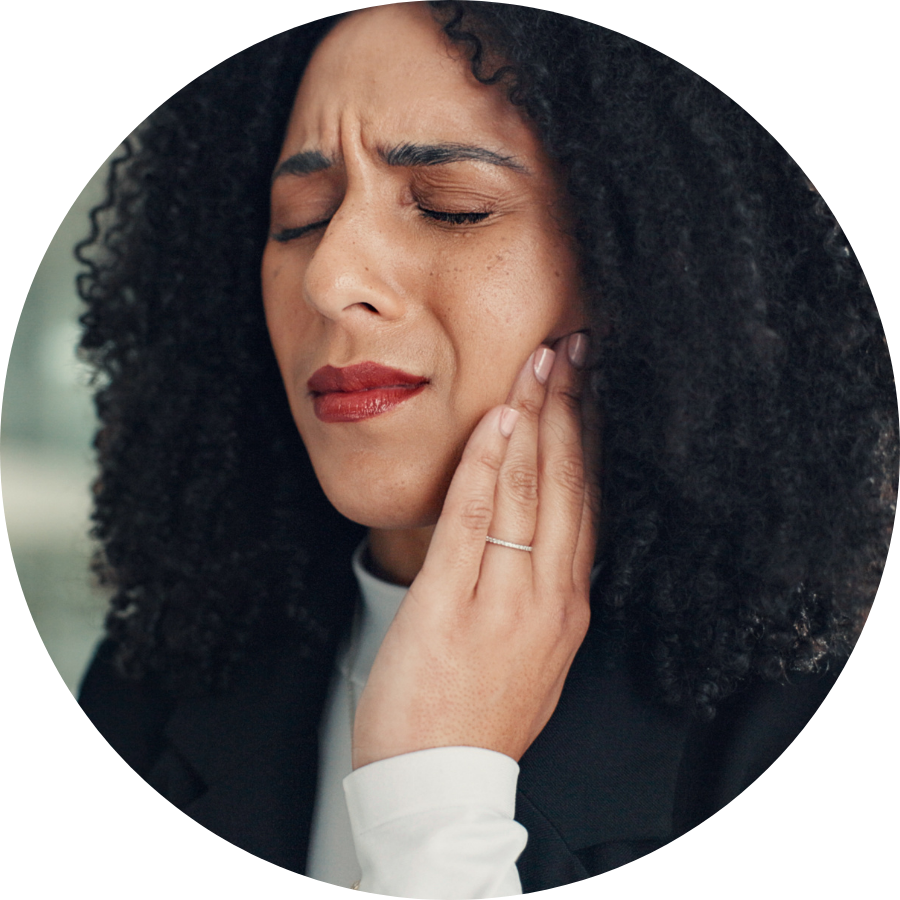

TMJ Disorder in Burlington, ON

Living with persistent jaw pain, headaches, or difficulty chewing can affect your comfort and daily routine, and these concerns may be related to TMJ disorder in Burlington. At Dentology Dentists, we provide personalized care for TMJ disorder in Burlington, helping patients understand their condition and explore an appropriate treatment plan designed to reduce discomfort and improve jaw function. If you are experiencing TMJ symptoms, contact our team today to learn more and take the first step toward lasting relief.

What Is TMJ Disorder?

Temporomandibular joint (TMJ) disorders encompass a range of issues associated with the jaw joint, a more intricate structure than commonly perceived. Today, symptoms such as jaw pain or clicking can be identified and treated more promptly than before. These disorders arise from a misalignment between the jaw joints and the muscles responsible for chewing. The right and left joints connecting the jaw to the skull can be affected, potentially leading to more severe conditions, underscoring the importance of early diagnosis and intervention.

Several factors can contribute to developing a temporomandibular joint (TMJ) disorder. Teeth grinding or clenching is a common cause, as the forces generated during these actions can stress the TMJ and jaw muscles, leading to potential damage. Additionally, injuries or diseases can also be responsible. Conditions like arthritis may directly degrade or affect the joint indirectly by stretching or tearing muscle ligaments. This can result in displacing the jaw joint’s cartilage cushion, known as the disk.

Regardless of the specific cause, TMJ disorder symptoms can manifest in various ways, including clicking sounds, pain, a misaligned bite, or a grating sound when opening the mouth. These symptoms can contribute to difficulties in fully opening the mouth wide. Seeking timely diagnosis and appropriate intervention is crucial for effectively managing TMJ disorders and alleviating associated discomfort.

Do You Suffer From a TMJ Disorder?

  • Do you clench or grind your teeth?
  • Are your muscles stiff or sore when you wake up in the morning?
  • Do you suffer from periodic neck or headaches?
  • Does your pain worsen when you clench your teeth?
  • Does stress on your teeth or jaw make your pain worse?
  • Does your jaw, grate, pop, click, lock or catch when you open your mouth?
  • Is there difficulty or pain when you open your mouth to eat or yawn?
  • Have you ever damage your head, jaws or neck?
  • Do you suffer from arthritis in other joints in your body?
  • Are there teeth that no longer touch when you bite down?
  • Do your teeth meet up differently when you bite?
  • Is it difficult to use your front teeth to tear or bite food?
  • Are your teeth sensitive, broken, worn or loose?
What Is Tmj Disorder

Treatment

Numerous treatment options are available for TMJ disorders, all geared towards restoring the function of the jaw. Once a TMJ disorder is identified, Dr. Lewis and Dr. Lloyd can collaborate to determine the most suitable treatment for your issue. Optimal results are often achieved through a combined approach, incorporating self-care practices and professional intervention.

Treatment priorities include alleviating joint pain and reducing muscle spasms. This is typically addressed with muscle relaxants, pain medication, and anti-inflammatories. Several self-care options are also available, such as using ice and heat, consuming soft foods, practicing jaw exercises, allowing for adequate jaw rest, maintaining good posture, and keeping teeth apart when not eating or swallowing.

Physical therapy and stress management techniques, such as biofeedback, can be beneficial. A splint, a transparent plastic appliance that maintains separation between teeth is another approach to reducing muscle strain and pain. Various appliances serve distinct purposes in treating TMJ disorders. A nightguard, for instance, prevents grinding and clenching, allowing muscles to relax and safeguarding joint surfaces and cartilage.

An anterior positioning device is designed to move the jaw forward, aiding in repositioning the disk and relieving pressure on jaw sections. It can be worn continuously to support jaw healing. Another option, an orthotic stabilization appliance, is worn 24 hours a day to protect against tooth wear and relocate the jaw into the correct position. These diverse treatment options offer flexibility to address the unique needs of individuals with TMJ disorders.

TMJ Treatment Procedure at Dentology Dentists

At Dentology Dentists, every case of TMJ disorder in Burlington begins with a thorough evaluation to understand the cause of your symptoms and determine the most appropriate treatment plan. Our approach focuses on improving the function of the temporomandibular joint, reducing jaw pain and TMJ pain, and recommending treatment options that are appropriate for your individual needs.

One 1

Initial Assessment and Diagnosis

Your visit begins with a comprehensive initial assessment and consultation. We review your medical and dental history, evaluate your TMJ symptoms, examine your jaw joint, jaw muscles, teeth, bite, and jaw movement, and discuss concerns such as teeth grinding, clenching, difficulty chewing, ear pain, neck pain, headaches, or previous trauma. If needed, diagnostic imaging may be recommended to support an accurate diagnosis of your temporomandibular joint disorder.

2

Personalized Conservative TMJ Treatment

Following your evaluation, we develop a customized treatment plan based on your condition and oral health goals. Depending on your needs, TMJ treatment may include an oral appliance, jaw exercises, TMJ therapy, TMJ physiotherapy, manual therapy, relaxation techniques, and recommendations to help reduce stress, teeth grinding, and clenching. These conservative approaches are often the first step in managing TMJ disorders and supporting healthier jaw function.

3

Bite Correction and Restorative Treatment Options

If TMJ disorder in Burlington has contributed to jaw misalignment or changes in your bite, we may recommend treatment to improve how your teeth come together. This may include bite adjustment to improve alignment and reduce pressure on the temporomandibular joint. When appropriate, restorative dental treatments such as crowns, bridges, or dental implants may be recommended to restore damaged teeth and improve bite function. Orthodontic treatment using braces or clear aligners may also be considered to correct tooth alignment and support a healthier bite relationship.

4

Advanced Surgical Treatment When Appropriate

In more complex cases where conservative care does not provide sufficient improvement, additional treatment options may be discussed. Depending on your diagnosis, this may include jaw reconstruction through orthognathic surgery to improve jaw alignment and function. For severe temporomandibular joint disorder, including significant joint degeneration, persistent jaw dislocation, or cases that have not responded to appliance therapy, procedures such as open joint repair surgery or arthroscopy may be considered. If surgical care is appropriate, we will discuss your options thoroughly and refer you to the appropriate surgical provider when necessary.

5

Follow-Up Care and Progress Monitoring

Throughout your care, we schedule follow-up appointment visits to monitor your progress and make adjustments to your treatment plan as needed. We continue evaluating your symptoms, jaw function, and comfort to help support long-term oral health and improve your quality of life while managing TMJ disorder in Burlington.

Why Choose Dentology Dentists?

Choosing the right treatment for TMJ disorder in Burlington means finding a dental team that takes the time to understand your symptoms and recommend care that fits your individual needs. At Dentology Dentists, we focus on thorough assessments, personalized treatment planning, and clear communication throughout every stage of care. Our goal is to help you improve jaw function, reduce discomfort, and support your long-term oral health with practical and evidence-informed treatment options.

Personalized Care for Every Patient

We recognize that every case of temporomandibular joint disorder is different, so we develop a customized treatment plan based on your symptoms, oral health, and lifestyle. Our recommendations are tailored to help you achieve meaningful relief while supporting healthy jaw function.

Comprehensive Evaluation Process

Our team performs a detailed examination and initial assessment to understand the possible causes of your TMJ disorder in Burlington. This careful approach helps us identify contributing factors such as teeth grinding, jaw misalignment, arthritis, or previous trauma before recommending treatment.

Conservative Treatment Options

We emphasize non-surgical approaches whenever appropriate, including TMJ therapy, oral appliances, jaw exercises, and patient education. If additional support is beneficial, we may recommend services such as TMJ physiotherapy or collaborate with other healthcare professionals to provide coordinated care.

Support Throughout Your Care

We continue monitoring your progress through follow-up visits and adjust your care as your condition changes. Our team is committed to answering your questions, providing guidance, and helping you manage your symptoms throughout your treatment journey.

Frequently Asked Questions

We commonly see patients experiencing jaw pain, TMJ pain, clicking sounds, difficulty chewing, and limited jaw movement. Some patients also report ear pain, neck pain, headaches, or soreness in the jaw muscles. Symptoms may appear gradually or develop after trauma, injury, or prolonged clenching and teeth grinding. During your visit, we perform a thorough examination to determine whether your symptoms are related to temporomandibular joint disorder. Once we complete your assessment, we discuss appropriate treatment options based on your individual needs.

There are several possible causes of TMJ disorder in Burlington, and many patients have more than one contributing factor. Common causes include bruxism, teeth grinding, jaw misalignment, arthritis, stress, previous injury, inflammation, and changes affecting the jaw joint. Poor posture, repeated clenching, and excessive strain on the jaw muscles may also contribute to symptoms. During your consultation, we evaluate these factors carefully before recommending treatment. Our goal is to identify the underlying cause whenever possible so we can create an appropriate treatment plan.

No, surgery is not necessary for most patients with TMJ disorders. We typically begin with conservative approaches such as oral appliances, TMJ therapy, jaw exercises, and recommendations to reduce teeth grinding and stress. Depending on your needs, we may also discuss TMJ physiotherapy, manual therapy, or referrals for supportive care. Surgical treatment is generally considered only in select situations after careful evaluation and when more conservative options are not appropriate. We will explain every available option so you can make an informed decision about your care.

The length of TMJ treatment depends on the severity of your condition and the factors contributing to your symptoms. Some patients notice improvement within a few weeks, while others require ongoing care over a longer period. We monitor your progress during follow-up appointments and adjust your treatment plan when necessary. Consistently following recommendations, including wearing an oral appliance if prescribed and completing home jaw exercises, may support better outcomes. We will discuss realistic expectations with you during your consultation.

We encourage you to schedule an appointment if you experience persistent jaw pain, recurring TMJ pain, difficulty opening your mouth, or frequent headaches that may be related to your jaw. Early evaluation may help identify contributing factors before symptoms become more severe. During your visit, we perform a comprehensive examination, discuss your concerns, and explain our findings. We then recommend a personalized treatment plan that reflects your condition and oral health goals. Our team is here to answer your questions and help you make informed decisions about your care.

Schedule A Consultation Today!

If you are experiencing TMJ disorder in Burlington, the team at Dentology Dentists is here to help you understand your condition and discuss treatment options that fit your needs. We provide comprehensive assessments and personalized care designed to improve jaw function, reduce discomfort, and support your long-term oral health. Whether you have recently developed symptoms or have been managing them for some time, we encourage you to seek an evaluation. Call 905-632-5881 today to schedule a consultation and learn more about your treatment options. We look forward to helping you take the next step toward improved comfort and healthier jaw function.

Call Now Button